What Hyperbaric Oxygen
Therapy Does
Hyperbaric oxygen therapy, or HBOT, uses pressure and oxygen to support the body's natural repair environment. At Wellington Hyperbarics, sessions are supervised, suitability-screened, and designed to help people understand whether HBOT may be appropriate for their recovery, wellness or performance goals.
A simple way to understand HBOT
Most people think oxygen is only about breathing. HBOT takes the idea further. Inside a pressurised chamber, oxygen can dissolve more effectively into the plasma, helping oxygen reach areas where normal circulation may be under stress. This does not force healing, but it may support the conditions the body uses for repair, energy production and recovery.
Important: HBOT is not suitable for everyone. We start with a suitability call and safety screening before treatment.
The three big things HBOT is used to support
At a simple level, HBOT is used to support oxygen delivery, inflammation balance, and the body's natural repair processes.
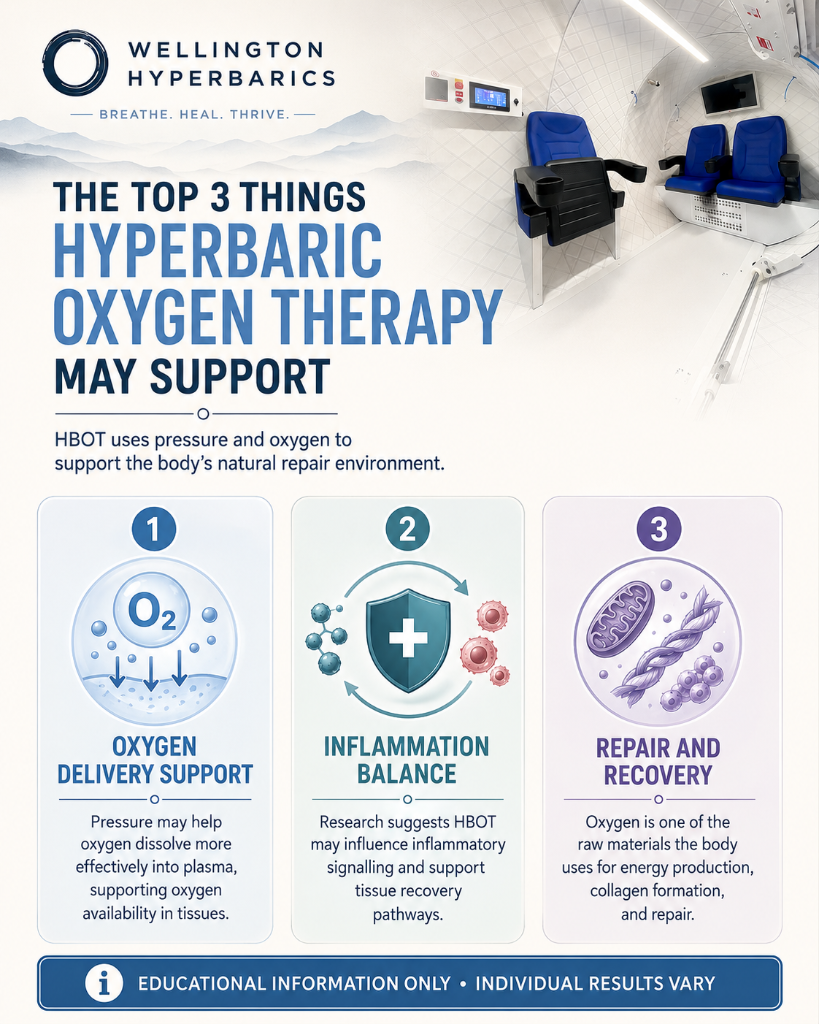
Pressure helps oxygen dissolve into the blood plasma, which may support oxygen availability in tissues.
Research suggests HBOT can influence inflammatory signalling and tissue recovery pathways.
Oxygen is one of the raw materials the body uses for collagen formation, mitochondrial energy production and repair.
Why oxygen matters at the cellular level
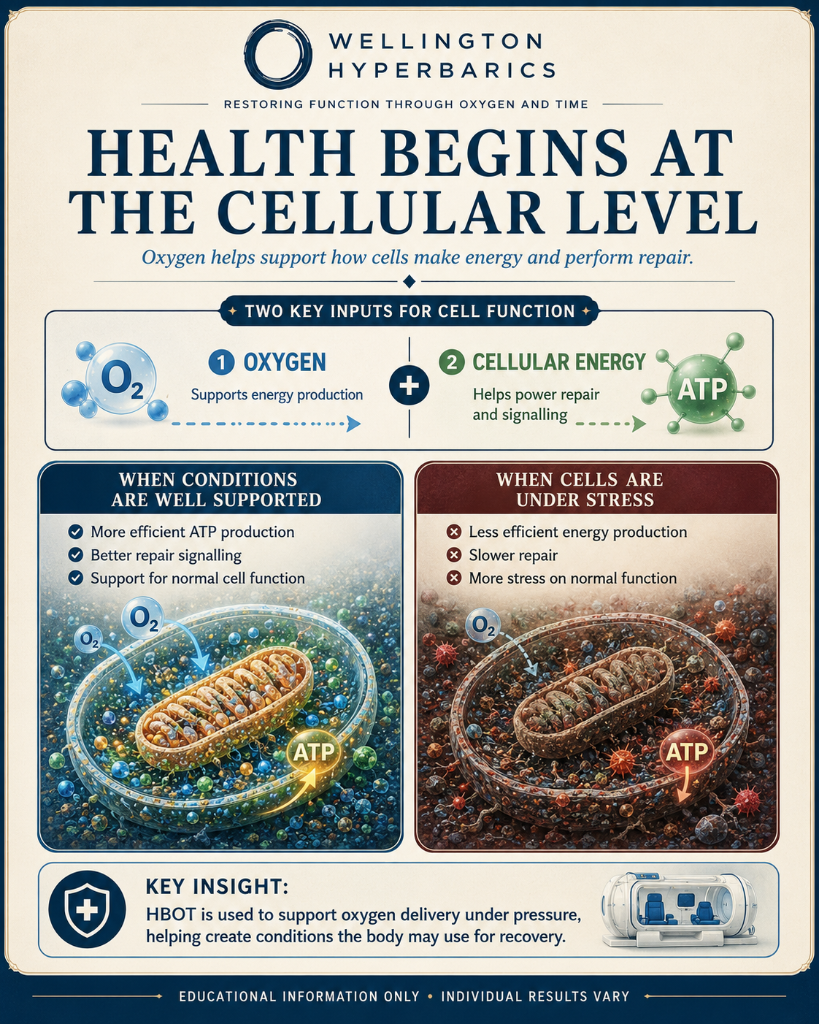
Every cell needs oxygen to make energy. Inside the mitochondria, oxygen helps drive ATP production. ATP is the energy currency cells use for repair, signalling, movement and normal function. When oxygen delivery and cellular energy are under stress, recovery can feel slower.
Oxygen + mitochondrial function = energy support
Energy support + repair signalling = better conditions for recovery
Brain recovery depends on blood flow, oxygen and connection
The brain is highly energy-demanding. It relies on good blood flow, oxygen delivery and mitochondrial output. Capillaries help deliver oxygen and fuel to neurons. Neurons then use that energy to maintain signalling, repair and connection.
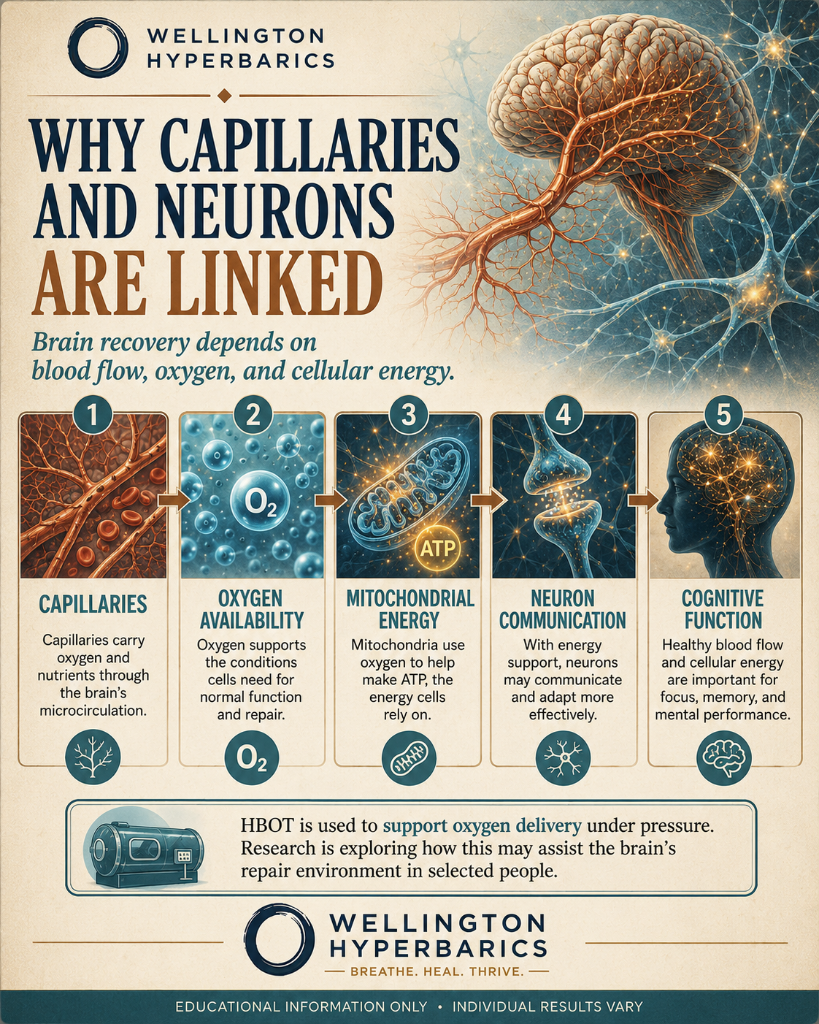
Better oxygen availability may support tissue metabolism.
Vascular support may help the brain's repair environment.
Energy availability may support neuroplasticity and clearer signalling.
When brain energy improves, mood may follow
Mood, focus and resilience are closely linked to brain energy, blood flow, sleep and nervous system regulation. HBOT research in selected groups has reported improvements in quality of life, cognitive symptoms, sleep and psychological symptoms, although results vary and more research is still developing.
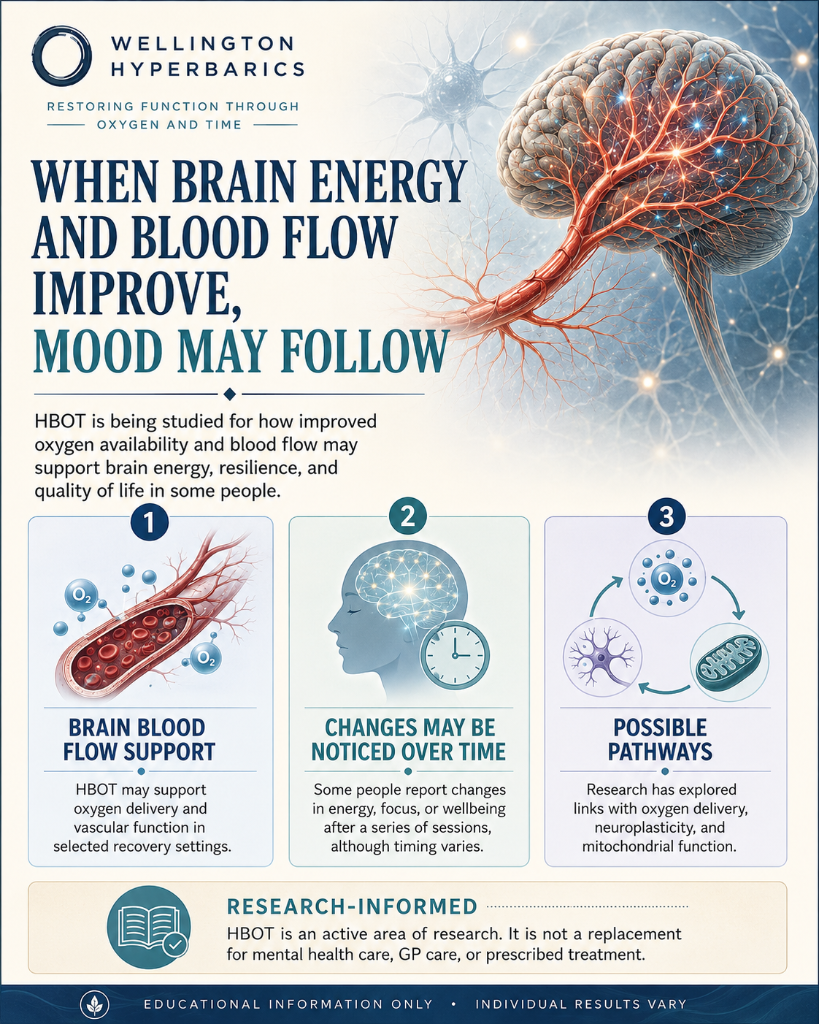
Important: HBOT is not a replacement for mental health care, medication, counselling or GP support. It may be considered as part of a wider recovery plan where appropriate.
What happens during a session?
We discuss your goals, health history and whether HBOT appears appropriate.
We check important factors such as ear, sinus, lung and medical history.
You sit comfortably inside the chamber while pressure is gradually increased.
Our team monitors the session and explains what to expect.
Many clients start with an initial exploratory phase before deciding whether to continue.
Who commonly enquires about HBOT?
People enquire for many reasons. A suitability call helps determine whether HBOT is appropriate.
Suitability is determined individually. HBOT is not appropriate for all people or all conditions.
What does the research suggest?
HBOT is an active research area. Studies have explored effects on oxygen delivery, brain function, post-concussion symptoms, long COVID symptoms, quality of life, neuroplasticity, blood flow and mitochondrial function. The evidence varies by condition, protocol and patient group, so we do not present HBOT as a guaranteed treatment. We use the research to guide safe, informed conversations.
Hyperbaric oxygen therapy improves neurocognitive functions and symptoms of post-COVID condition: randomized controlled trial.
A randomised controlled trial published in Scientific Reports reported improvements in neurocognitive symptoms and other post-COVID symptoms after HBOT in selected participants.
Hyperbaric Oxygen Therapy Can Improve Post Concussion Syndrome Years after Mild Traumatic Brain Injury.
A PLOS ONE study explored HBOT in people with persistent post-concussion symptoms and reported improvements in brain function and quality of life measures.
Test Your Knowledge
What did published HBOT studies report?
In a 2013 published human study, HBOT was investigated in people with persistent post-concussion symptoms 1–5 years after mild traumatic brain injury. The study reported changes in cognitive test scores, quality of life and SPECT brain imaging. This short quiz helps explain some of the reported results.
View the studyThis quiz is educational only. It summarises results reported in published studies and does not guarantee individual outcomes. HBOT suitability, response and outcomes vary. This information does not replace medical advice.
In one published case example from the study, a patient's memory score improved after HBOT. What percentage improvement do you think was reported?
Want to know whether HBOT is right for you?
Start with a short suitability call. We will explain the process, safety screening, session options and whether HBOT may be appropriate for your goals.
Information on this page is educational and does not replace medical advice. Individual results vary. HBOT is not suitable for everyone and is not presented as a treatment for any specific condition.
© 2026 Wellington Hyperbarics. All rights reserved.
General disclaimer: Wellington Hyperbarics provides educational, assessment and adjunctive wellness support. Information on this website is not medical advice, is not a diagnosis, and does not replace your GP, specialist, emergency care or prescribing clinician. Suitability screening is required before HBOT. Individual responses vary. Medication decisions should always be made with the prescribing clinician.
Safety notice: HBOT involves pressure exposure and oxygen use. Potential risks include ear, sinus or dental barotrauma, oxygen-related adverse effects, fatigue changes and claustrophobia. Some medical conditions require medical review before treatment.
AI governance: AI-assisted tools may be used internally to organise information and draft reports. Reports are reviewed through Wellington Hyperbarics' clinical governance process before being shared. AI output is not used as a standalone diagnosis or treatment decision.
© 2026 Wellington Hyperbarics. All rights reserved.